
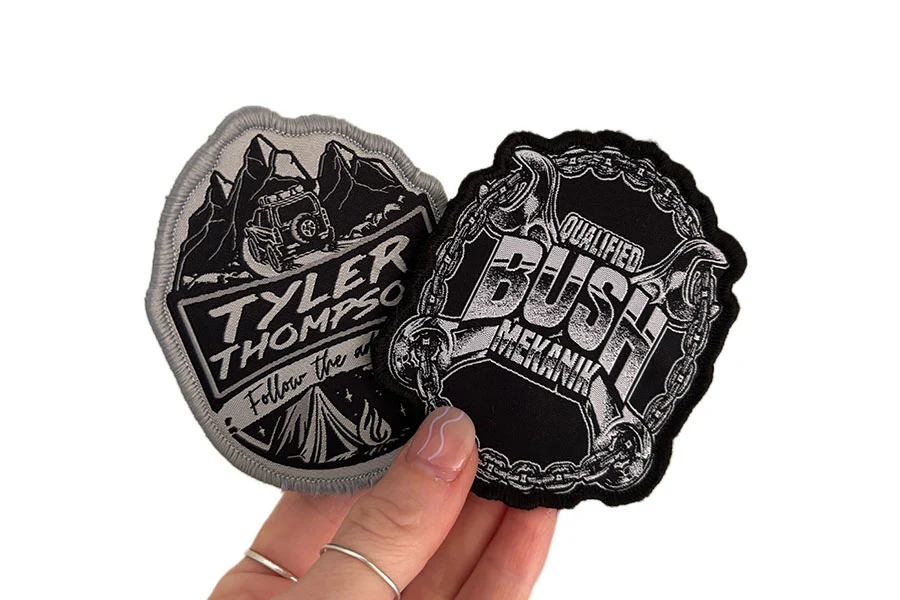
They help companies keep branding consistent across sites, seasons, and staff changes, without repeatedly buying new garments.
Why do Velcro patches suit the realities of workwear?
Velcro Patches fit the way workwear is actually used: hard, often, and by different people. A Velcro patch can be removed before a heavy wash, replaced when worn, or swapped when someone changes departments.
This practicality is why they show up across trades, logistics, security, facilities, and events teams. The branding stays visible when it needs to, and optional when it does not.
How do Velcro patches make uniforms more flexible?
They let one garment do more than one job. A single jacket can display a company logo during a customer visit, then switch to a role patch, name patch, or site credential for operational work.
This flexibility is especially helpful for businesses with multiple service lines. It also suits teams that share PPE, issue temporary uniforms, or need different identifiers for different contracts.
Why do teams like being able to swap name and role patches?
Because it reduces friction during busy days. If staff rotate between tasks, a removable patch makes it easier to keep identification accurate without issuing extra clothing.
It also supports better customer interactions. Clear names, roles, and certifications help clients know who they are speaking to, which can improve trust on site, in-store, or at the front desk.
How do Velcro patches help with staff turnover and onboarding?
They make it cheaper and faster to kit out new starters. Instead of ordering fully customised garments for each new hire, companies can issue standard workwear and attach a name patch or team badge on day one.
When someone leaves, the patch comes off and the garment can be reissued where appropriate. That can reduce uniform waste and simplify stock control for larger operations.
Why are Velcro patches popular for multi-site or contract-based work?
Because branding and compliance often change by location. One client may require a specific identifier, while another needs a different badge, colour coding, or access label.
Velcro patches allow companies to keep base uniforms consistent while adapting the outer branding to match each site’s rules. That is useful for contractors, cleaning services, security teams, and maintenance crews moving between premises.
Do Velcro patches make garments last longer?
In many cases, yes. Sewn or printed branding can fade, crack, or become damaged, and replacing it often means replacing the entire garment. With Velcro, a worn patch can be swapped without retiring the jacket, gilet, or shirt.
They also help avoid permanent branding on garments used across projects. When the project ends, the patch is removed and the same workwear can be redeployed.
Why do they look professional compared with other options?
They can look cleaner because the patch sits in a defined position and can be replaced if it starts to fray. Many businesses also prefer the structured, uniform appearance that patches provide, particularly when staff are customer-facing.
Velcro patches can also support a consistent layout. Logos, names, flags, and certifications can be positioned in a standard way across the whole team, which makes the brand easier to recognise.
How do Velcro patches support safety and compliance?
They can carry information that matters operationally, such as first-aider status, fire marshal roles, security clearance, or machinery certifications. When these responsibilities change, the patch can be updated quickly.

That helps reduce confusion during incidents and audits. It also supports clear chain-of-command visibility on busy sites, where quick identification can improve response times. See choosing between iron-on and sewn patches.
Are Velcro patches cost-effective for businesses?
Often, yes, especially at scale. They reduce the need for multiple sets of branded clothing per person and minimise the cost of replacing garments just because the branding is out of date.
They also help companies standardise uniform purchasing. Buying fewer garment variants and managing branding through patches can make procurement simpler, particularly for organisations with several departments.
What should companies consider before choosing Velcro patches?
They should consider where the patch will be worn, how often the garment is washed, and what the job demands. High-friction environments may need stronger hook-and-loop and tighter stitching around patch edges.
They should also choose patch types that match the brand’s needs. Embroidered patches feel premium, woven patches handle fine detail well, and PVC or rubber patches perform strongly in wet or dirty settings. Placement matters too, since chest, sleeve, and back positions all serve different visibility goals.
What is the main reason Velcro patches keep growing in workwear branding?
They give businesses control. Branding can be updated, swapped, and maintained without rebuilding an entire uniform programme.
For companies that want durable workwear, flexible identification, and a consistent professional look, Velcro patches deliver a practical branding system that fits how teams actually work.
FAQs (Frequently Asked Questions)
Why are Velcro patches ideal for workwear branding in demanding environments?
Velcro patches suit the realities of workwear because they withstand dirt, friction, and frequent washing. They can be easily removed before heavy washes, replaced when worn out, or swapped when staff change roles, making them practical across various industries like trades, logistics, security, and events.
How do Velcro patches enhance the flexibility of uniforms?
Velcro patches allow a single garment to serve multiple purposes by displaying different identifiers such as company logos, role patches, name tags, or site credentials. This adaptability is especially beneficial for businesses with multiple service lines or teams that share PPE or require varied identification for different contracts.
In what ways do Velcro patches benefit staff turnover and onboarding processes?
Velcro patches make onboarding more cost-effective and faster by enabling companies to issue standard workwear and simply attach personalised name or team badges on day one. When employees leave, their patches can be removed and uniforms reissued, reducing waste and simplifying stock management.

Why are Velcro patches preferred for multi-site or contract-based work environments?
Because branding and compliance requirements often vary by location, Velcro patches let companies maintain consistent base uniforms while adapting outer branding to meet specific site rules. This flexibility is invaluable for contractors, cleaning services, security teams, and maintenance crews who operate across multiple premises.
Do Velcro patches contribute to the longevity of work garments?
Yes. Unlike sewn or printed branding that can fade or crack requiring garment replacement, Velcro patches can be swapped out when worn without retiring the entire garment. They also prevent permanent branding on garments used across different projects by allowing easy removal after project completion.
How do Velcro patches support safety and compliance on work sites?
Velcro patches can display critical operational information such as first-aider status, fire marshal roles, security clearance, or machinery certifications. Their quick updateability reduces confusion during incidents and audits while enhancing chain-of-command visibility for faster response times on busy sites.